
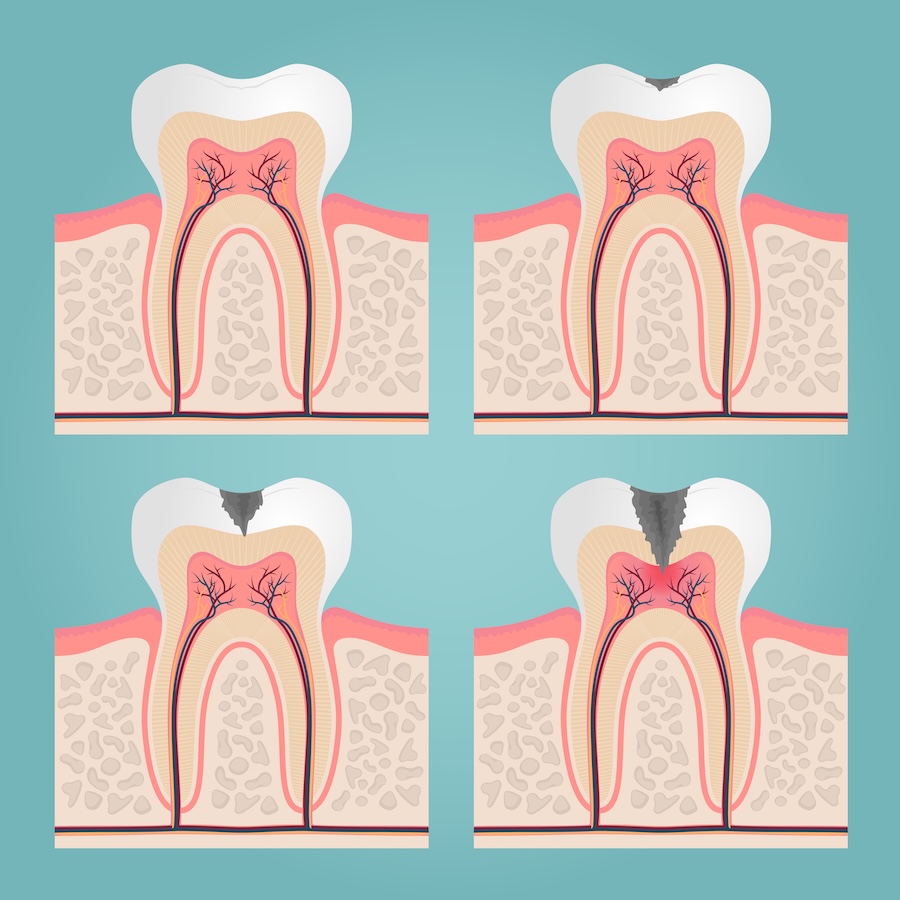
What Does a Stage 1 Cavity Look Like?
June 11, 2026 9:00 amA stage 1 cavity does not always look like a hole in the tooth. Early decay often starts with small changes that are easy to miss. You might notice a chalky white spot, a faint brown area, a tiny shadow near a groove, or nothing obvious at all. Since there may be no pain, it is easy to assume everything is fine and move on with your day.
However, a cavity usually starts before the tooth breaks down enough to form a visible hole. In the earliest stage, minerals begin to leave the enamel, which is the hard outer layer of the tooth. At this point, the area may look dull, white, rough, or slightly discolored. Sometimes it only shows up during a dental exam because back teeth, tight spaces, and deep grooves are hard to inspect in a bathroom mirror.
At Grand Rapids Family Dentistry in Grand Rapids, MI, Dr. Kate Palmateer, Dr. Josh Palmateer, Dr. Abigail Gill, and the team can check suspicious spots and tell whether they are early enamel changes, staining, plaque buildup, or a cavity that needs treatment. When decay is caught early, there may be more options to protect the tooth before it turns into a bigger repair.
What Is a Stage 1 Cavity?
A stage 1 cavity is the earliest stage of tooth decay. At this point, the enamel is starting to lose minerals because acids have been sitting on the tooth surface. These acids often come from bacteria in plaque after they feed on sugars and starches from food and drinks.
In many cases, stage 1 decay affects only the enamel. Since enamel does not have nerves, this stage often does not hurt. That is one reason early cavities can go unnoticed until a dentist finds them during an exam.
At this stage, the tooth may not have an actual hole yet. Instead, the enamel may look weaker, duller, or more porous. You may hear this called enamel demineralization, an early lesion, or an early cavity. The wording can vary, but the point is the same: the tooth is showing early signs of mineral loss.
The encouraging part is that some very early enamel changes may be slowed or even remineralized with the right care. Once a cavity breaks through the enamel and forms a deeper hole, though, it usually needs a filling or another dental restoration.
How a Stage 1 Cavity May Look
A stage 1 cavity often appears as a white, chalky, or cloudy spot on the tooth. This can happen when enamel loses minerals and begins to look less shiny than the surrounding tooth. The spot may stand out more when the tooth is dry, which is one reason dentists use air during an exam.
In some cases, early decay may look light brown, tan, or slightly gray. This can be confusing because stains can look similar. A brown line in a groove may be a harmless stain, but it may also be a sign that decay is starting in a deep pit or fissure.
On front teeth, early cavities may show up near the gumline, between teeth, or around orthodontic brackets if plaque has been sitting there. On back teeth, they may hide in the chewing grooves or between teeth where you cannot see them well.
Because of that, appearance alone is not enough to diagnose a cavity. A spot that looks small may be deeper than expected, while a dark groove may only be staining. Dr. Kate Palmateer, Dr. Josh Palmateer, or Dr. Abigail Gill can examine the area and, if needed, use X-rays to see what is happening below the surface.
A Stage 1 Cavity May Not Hurt
Early tooth decay often gives very few warnings at first. A stage 1 cavity usually does not cause pain because the damage is limited to enamel. Since enamel does not contain nerves, the tooth may feel completely normal.
You may still notice small changes. For example, the area may feel a little rough to the tongue, or the tooth may look dull in one spot. However, many people do not notice anything until the dentist points it out during a visit.
As decay moves deeper, symptoms become more likely. Sensitivity to cold, sweets, or pressure can happen when decay reaches the dentin, which is the softer layer under enamel. By then, the cavity is usually more advanced.
So, no pain does not always mean no problem. It simply means the tooth may not be irritated enough to complain yet. Teeth can be quiet little procrastinators that way.
Where Stage 1 Cavities Commonly Start
Stage 1 cavities often begin in areas where plaque tends to collect. The chewing grooves of molars are a common spot because food and bacteria can settle into the pits and fissures. Even with good brushing, these grooves can be tricky to clean well.
Cavities can also start between teeth. These areas are harder to see and depend heavily on flossing or other between-the-teeth cleaning tools. Since early decay between teeth may not be visible in the mirror, dental X-rays can be especially helpful.
Another common area is near the gumline. Plaque can sit along the edge where the tooth meets the gums, especially if brushing misses that area. If gums have receded, exposed root surfaces can be more vulnerable because they are not covered by enamel.
Around older fillings, crowns, or other dental work, decay can also begin at the margins. If a filling edge leaks or a crown no longer seals well, bacteria can collect in tiny spaces. From there, decay may start quietly and spread under the surface.
Stage 1 Cavity or Tooth Stain?
A tooth stain and a stage 1 cavity can look similar, especially in grooves or along the gumline. Coffee, tea, tobacco, dark foods, and natural tooth anatomy can all leave discoloration that may look suspicious. So, a dark mark does not automatically mean you have a cavity.
However, stains usually sit on the surface or in natural grooves, while early decay changes the enamel itself. A cavity may feel rough, look chalky, or appear dull rather than shiny. It may also be in an area where plaque collects often.
Dentists use more than color to judge the spot. They may look at texture, location, X-rays, cavity risk, past dental history, and whether the area has changed over time. In other words, the shade alone does not tell the whole story.
If you notice a new white spot, brown mark, or dark groove, it is worth having it checked. It may be staining, but it may also be early decay that can be managed more easily now than later.
Can a Stage 1 Cavity Heal?
A very early stage 1 cavity may be able to remineralize if the enamel has not broken down into a hole. Remineralization means minerals such as calcium and phosphate return to the enamel, making it stronger. Fluoride can also help the enamel resist acid and repair early weak spots.
This is why early detection can be so helpful. If the decay is still limited to enamel and the surface is intact, Dr. Kate Palmateer, Dr. Josh Palmateer, or Dr. Abigail Gill may recommend fluoride, better plaque control, diet changes, or monitoring instead of placing a filling right away.
That said, not every early cavity can be reversed. If the enamel surface has broken down, bacteria can move deeper into the tooth. Once there is a true cavity or hole, brushing and fluoride cannot rebuild the missing tooth structure.
The goal is to catch the problem while the tooth still has a chance to strengthen. That is also why waiting until a tooth hurts can backfire. By the time pain shows up, the cavity may have already moved past stage 1.
How Dentists Check Early Cavities
During a dental exam, your dentist can look for early signs of decay using good lighting, drying the tooth, and checking areas where plaque tends to hide. Drying the tooth can make chalky white spots easier to see.
Dental X-rays may also be recommended, especially for cavities between teeth. These cavities can be nearly impossible to spot early with the eyes alone. X-rays help show whether decay has started under the surface or between neighboring teeth.
The dentist may also consider your overall cavity risk. If you have a history of frequent cavities, dry mouth, high sugar intake, acid reflux, crowded teeth, or certain medications, a suspicious spot may need closer monitoring.
Not every mark needs immediate treatment. Sometimes the best plan is to watch the area, strengthen the enamel, and recheck it later. Other times, a filling may be recommended if the decay has broken through the enamel or is likely to keep spreading.
What You Can Do at Home
If you think you may have a stage 1 cavity, the first step is to improve plaque control around that area. Brush twice a day with fluoride toothpaste, and make sure the toothbrush bristles reach the gumline and chewing grooves. Rushing through brushing can leave plaque exactly where cavities like to start.
Next, clean between the teeth daily. Floss, floss picks, interdental brushes, or a water flosser can help reduce plaque in areas your toothbrush cannot reach. Between-the-teeth cavities are common, and they do not care how shiny the front surfaces look.
It also helps to reduce frequent sugar and acid exposure. Sipping soda, sports drinks, sweet coffee, juice, or energy drinks over a long period gives bacteria more chances to make acid. Instead, keep sugary or acidic drinks with meals when possible, drink water often, and avoid grazing throughout the day.
If your dentist recommends fluoride treatment, prescription toothpaste, sealants, or more frequent cleanings, those steps can support enamel strength. They may not be exciting, but they can help you avoid more dental work later.
When a Stage 1 Cavity Needs Treatment
A stage 1 cavity may not need a filling if the enamel surface is still intact and the area can be remineralized. In that case, the plan may focus on fluoride, improved cleaning, diet changes, and monitoring.
However, treatment may be needed if the enamel has started to break down, the spot is getting larger, or the decay has moved into dentin. Once decay reaches dentin, it usually spreads faster because dentin is softer than enamel.
A filling may also be recommended if the cavity is in a high-risk area, such as between teeth or in a deep groove that is hard to clean. Waiting too long can allow the cavity to grow, which may mean a larger filling later.
The right decision depends on the tooth, the location, your cavity risk, and what the exam shows. Our dental team can explain whether the spot can be watched or whether treatment would better protect the tooth.
How to Lower Your Risk of Early Cavities
Preventing stage 1 cavities is mostly about reducing plaque, acid, and weak enamel. Brushing with fluoride toothpaste is a strong start, but technique counts. Angle the brush toward the gumline, use small movements, and give the back teeth enough attention.
The timing of sugar and acid exposure also plays a role. It is not only how much sugar you have, but how often your teeth are exposed to it. A sweet drink sipped for two hours can be harder on enamel than the same drink finished with a meal.
Dry mouth can raise cavity risk because saliva helps wash away food particles and neutralize acid. If your mouth feels dry often, mention it during your dental visit. Medications, mouth breathing, dehydration, and certain health conditions can all contribute.
Regular dental exams and cleanings help catch early changes before they become larger cavities. They also give the team a chance to recommend sealants, fluoride, or other preventive steps if your teeth need extra support.
Stage 1 Cavity Care in Grand Rapids, MI
A stage 1 cavity may look like a chalky white spot, a dull patch, a light brown mark, or a small shadow in a groove. Sometimes, though, it does not look like much at all. Since early tooth decay often does not hurt, the safest move is to have suspicious spots checked before they grow.
At Grand Rapids Family Dentistry in Grand Rapids, MI, Dr. Kate Palmateer, Dr. Josh Palmateer, Dr. Abigail Gill, and the team can examine early signs of decay and explain what the tooth needs. If the enamel can be strengthened, they can guide you through that. If a filling is needed, catching it early may help keep the repair smaller.
If you have noticed a white spot, dark groove, rough area, or new sensitivity, schedule a visit with Grand Rapids Family Dentistry. A quick look now can help you avoid a much bigger tooth project later.
FAQs
What does a stage 1 cavity look like?
A stage 1 cavity may look like a chalky white spot, dull patch, light brown area, or small dark mark in a groove. Sometimes it is not visible at home and is only found during a dental exam.
Does a stage 1 cavity hurt?
Usually, a stage 1 cavity does not hurt because it is limited to the enamel, which does not contain nerves. Pain or sensitivity is more likely once decay reaches deeper layers of the tooth.
Can a stage 1 cavity go away?
A very early stage 1 cavity may be able to remineralize if the enamel surface has not broken down. Fluoride, better cleaning, and diet changes may help strengthen the enamel, but a true hole will not repair itself.
How do I know if it is a cavity or a stain?
A stain and an early cavity can look similar. A dentist can check the texture, location, X-rays, and your cavity risk to determine whether the spot is harmless staining or early decay.
Do stage 1 cavities need fillings?
Not always. If the enamel is still intact, the area may be monitored and treated with fluoride or other preventive steps. If the enamel has broken down or decay is spreading, a filling may be recommended.
Where do early cavities usually start?
Early cavities often start in molar grooves, between teeth, near the gumline, around old fillings, or on exposed root surfaces. These areas tend to collect plaque and can be harder to clean well.
Categorised in: Cavities, Restorative Dentistry