
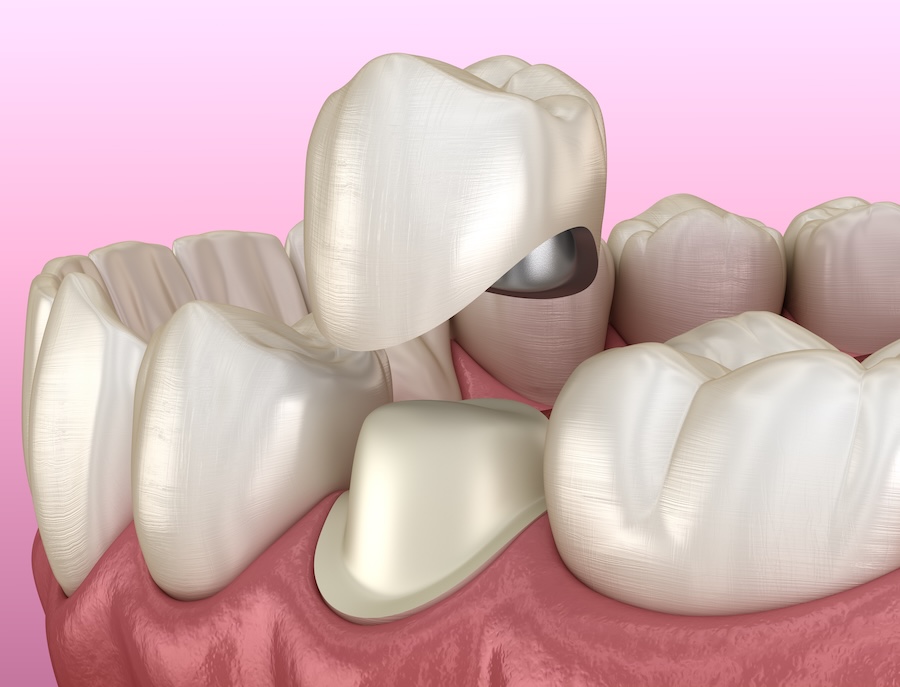
What Are the Symptoms of a Misaligned Crown?
February 25, 2026 9:00 amA dental crown should feel stable, comfortable, and natural when you bite or chew. In most cases, once the adjustment period passes, you shouldn’t think about it at all. If a crown begins to feel uncomfortable, sensitive, or slightly “off,” it may not be fitting properly.
At Grand Rapids Family Dentistry in Grand Rapids, MI, Dr. Kate Palmateer and Dr. Josh Palmateer evaluate crown concerns regularly. A misaligned crown is often correctable, especially when addressed early. Here are the symptoms to watch for.
What Does “Misaligned Crown” Mean?
A misaligned crown doesn’t necessarily look crooked. More often, it refers to how the crown fits within your bite or how it contacts neighboring teeth.
This can happen if:
- The crown is slightly too high when you bite down
- The edge does not sit flush with the gumline
- The contact between adjacent teeth is too tight or too open
- The crown has shifted due to cement breakdown
Your bite is precise so even a minor discrepancy can create noticeable discomfort. Sometimes, it won’t be noticeable at the initial placement appointment due to being numb.
Common Symptoms of a Misaligned Crown
- Redness
- Swelling
- Tenderness
- Bleeding during brushing or flossing
Pain When Biting or Chewing
If the crown makes contact before surrounding teeth, it can absorb more pressure than it should. This often leads to soreness when chewing or biting down. Some patients describe the tooth as feeling tender or sensitive to pressure.
Persistent Sensitivity
While temporary sensitivity after crown placement can be normal, ongoing sensitivity to cold or pressure may indicate that the bite needs adjustment or that the crown margin requires evaluation.
Gum Irritation Around the Crown
A crown that does not fit smoothly at the gumline can contribute to plaque buildup and localized inflammation. You may notice:
Healthy gums typically respond well to a properly contoured restoration.
Food Trapping Between Teeth
If food frequently becomes lodged around the crowned tooth, the contact area may not be ideal. Open contacts can allow food impaction, while overly tight contacts can make flossing difficult. Both situations can increase the risk of decay and gum irritation.
Rough or Sharp Edges
A crown should feel smooth. If your tongue consistently detects a ridge or rough margin, the crown may need polishing or minor reshaping.
Jaw Discomfort or Headaches
When a crown alters your bite alignment, it can contribute to muscle tension. Over time, this may lead to jaw soreness, facial tension, or mild headaches.
A Loose or Shifting Crown
A crown should remain stable. Movement may indicate cement failure or underlying structural concerns. This requires prompt attention to prevent further complications.
Can a Misaligned Crown Be Corrected?
In many cases, yes.
Treatment may involve:
- Minor bite adjustments
- Polishing or contour refinement
- Re-cementing the crown
- Replacement if structural damage is present
Early evaluation often allows for simpler solutions.
When to Schedule an Evaluation
If a crown continues to feel uncomfortable beyond the initial adjustment period — or if new symptoms develop months or years later — it is worth having it examined.
Even mild discomfort can signal that the crown needs refinement. Addressing the issue early helps protect both the tooth and surrounding gum tissue.
Symptoms of a Misaligned Crown in Grand Rapids, MI
At Grand Rapids Family Dentistry in Grand Rapids, MI, Dr. Kate Palmateer and Dr. Josh Palmateer assess crown fit, bite alignment, and surrounding tissue health to determine the source of discomfort.
A properly fitted crown should function comfortably and consistently. If yours does not, a professional evaluation can help restore stability and comfort.
Contact Grand Rapids Family Dentistry to schedule an appointment if you suspect your crown may be misaligned.
Categorised in: Dental Crowns, Dental Tips