
Why Would a Dentist Recommend a Gold Crown?
March 10, 2026 9:00 am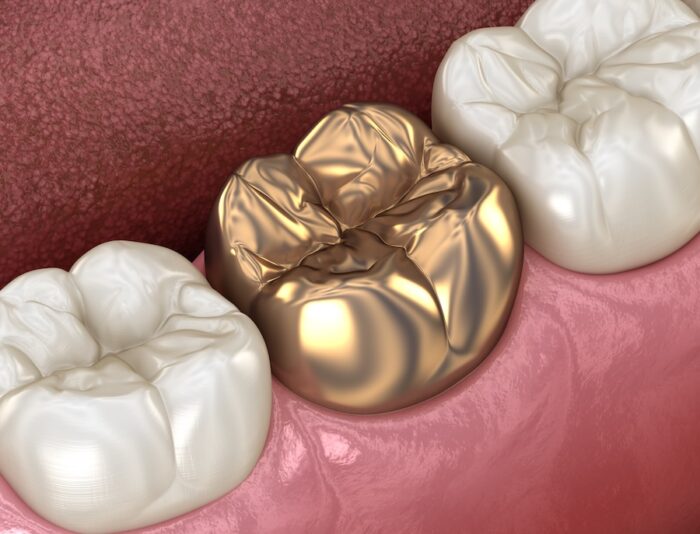
When a tooth needs a crown, many patients assume the restoration will always be tooth-colored. Modern ceramic materials are popular and can blend naturally with surrounding teeth. However, dentists sometimes recommend other materials depending on how the tooth functions and how much pressure it experiences during everyday chewing.
One option that still holds an important place in dentistry is the gold crown. While it may not be chosen for cosmetic areas, gold offers some practical advantages that have kept it relevant for decades. Dentists tend to think about restorations in terms of how they will perform years down the road, not just how they look on the day they are placed.
At Grand Rapids Family Dentistry in Grand Rapids, MI, Dr. Kate Palmateer and Dr. Josh Palmateer occasionally recommend gold crowns for teeth that handle a lot of chewing pressure. In the right situation, this material can provide a restoration that holds up exceptionally well over time.
Exceptional Durability
One of the biggest advantages of gold crowns is their long-term durability.
Gold is strong but also slightly flexible. This combination allows it to absorb chewing forces without cracking or fracturing. Back teeth, especially molars, handle significant pressure during everyday chewing. A restoration in that area needs to tolerate thousands of bite cycles every day.
Gold tends to wear gradually rather than chip or break. Because of this, gold crowns often last many years and sometimes even decades when properly maintained. Dentists frequently see older gold restorations that are still functioning well long after they were placed.
For teeth that do the heavy lifting during chewing, that kind of reliability can be a major benefit.
Gentle on Opposing Teeth
Another reason dentists sometimes recommend gold crowns is that they are gentler on the opposing teeth. When you bite down, the crown on one tooth contacts the tooth directly above or below it. Some restorative materials are harder than natural enamel and may gradually wear down the opposing tooth over time.
Gold behaves differently. It wears in a way that is similar to natural enamel, which helps reduce unnecessary wear on the tooth it bites against. Dentists often appreciate materials that work with the bite rather than against it. For patients who grind or clench their teeth, this characteristic can make gold a practical option.
Precise Fit at the Margins
Gold crowns are also known for their excellent marginal fit, meaning the area where the crown meets the natural tooth.
Because gold can be cast very precisely in a dental laboratory, technicians are often able to create restorations that fit extremely accurately along the edges of the tooth. That precise fit helps seal the tooth and reduces the chance of bacteria entering beneath the crown.
While modern ceramic crowns can also achieve excellent fits, gold has a long track record for this type of precision. It is one reason dentists have trusted the material for so many years.
Ideal for Back Teeth
For many patients, appearance is a major factor when choosing a crown material. Tooth-colored crowns are often preferred for front teeth or areas that show when smiling.
Molars in the very back of the mouth, however, are rarely visible during everyday conversation. In those areas, durability and function tend to matter more than cosmetics. A gold crown placed on a back molar can provide strong protection while remaining largely out of sight. Many dentists think of it as a practical solution for teeth that simply need to perform well for the long haul.
When Gold May Be the Best Choice
Dentists may recommend a gold crown in situations such as:
Restoring heavily worn molars
Replacing older metal restorations
Treating teeth that experience strong chewing forces
Patients who grind or clench their teeth
Situations where long-term durability is the top priority
Every patient’s bite and dental history are a little different, so the choice of crown material is always based on the specific needs of the tooth.
Crown Options at Grand Rapids Family Dentistry in Grand Rapids, MI
Dental crowns are designed to restore strength and function to teeth that have been damaged by decay, fractures, or large restorations. Choosing the right material helps ensure that the restoration holds up well over time.
At Grand Rapids Family Dentistry in Grand Rapids, MI, Dr. Kate Palmateer and Dr. Josh Palmateer evaluate each tooth carefully before recommending a crown material. In many cases, a tooth-colored crown is the right choice. In other situations—especially for back molars—a gold crown may offer the durability needed for long-term chewing forces.
If you have been told you may need a dental crown or want to learn more about your options, scheduling an exam at Grand Rapids Family Dentistry in Grand Rapids, MI can help determine the restoration that best fits your smile and bite.
Categorised in: Dental Crowns, Dental Tips